
Scott's Pizza Tour Pizza News

Canned Tomato Taste Test Results

September 16, 2010

The results of our first blind taste test of 16 canned tomatoes have been posted on Slice! We tried a variety of tomatoes from local grocery stores, supermarkets, pizzerias and restaurant supply stores. Tasters include Roberto Caporuscio (Keste), Adam Kuban (Slice), Brooks Jones (Me, Myself and Pie), Jason Fierman (I Dream of Pizza), Nick Sherman (Pizza Rules) and tomato researcher Erica Mole.

Check Out The Results of Round 1

NOOOOOOOO!!!

August 25, 2010

It looks like I flew too close to the sun. My beautiful tomato garden has been destroyed. Who’s to blame? I’ll tell you who: nature. For the past three days, New York has experienced weather more suited to Seattle. It’s constantly damp and gross, which is not good for adorable tomato plants. To be quite honest, I hadn’t checked on them for days. Rain means I don’t have to water them, right? NOPE! Rain means I should have thrown a tarp over them to stop wicked infiltration of unsolicited irrigation. I looked out the kitchen window this morning and saw this…

Those plants are supposed to stay vertical. I carefully tied the indeterminate vines to stakes with strips of pantyhose, as not to cut into the plants and prematurely end their lives. It looks like the weight of water droplets along with gusting winds was enough to take the plants down.

This is the reason great tomatoes are grown in Southern Italy and California’s central valley. Those regions don’t get rain in the summer, so controlled irrigation is possible. We’ll have to wait for next year to test the assumption that volcanic soil from Mt Vesuvius creates perfect growing conditions, but what good is soil below if your plants are at left vulnerable to nature from above?

Upon closer inspection, I found evidence of destruction left by yet another of nature’s dark warriors: rodents. It looks like a real jerk scampered around taking a single bite out of each ripe tomato.I know the photo seems blurry but I just wanted you to experience what it looked like through tear-filled eyes.

I was afraid this might happen so I’m glad I picked a few tomatoes while they were ripe, but it looks like the plants are out of commission unless I can fix them up tomorrow after the rain stops. In the meantime, I grabbed any untouched fruits and brought them inside. Now I have to learn how to can tomatoes. Sounds like a great project for tomorrow!

Here they are, the lonely soldiers who made it through the Great Tomato Ravaging of 2010. I’ll have more updates after tomorrow’s plant fixing / tomato canning operation is complete.

Tomato Update: They’re Turning RED!!!

July 19, 2010

I know I know - they are supposed to turn red, but this has been a long and tedious process so I am entitled to celebrate. People freak their baby’s first haircut or the funny position in which they found their dog sleeping, but I have no baby and I have no dog. Instead, I have nine tomato plants growing in an improvised plot behind my Brooklyn apartment. What started as a handful of seeds is now taking up significant space in my backyard. Some of the plants remain barren but others are starting to show me they mean business and I’m ready to cash their lycopene-filled checks at the bank of my belly.

I still have a few weeks to go before these suckers are ready to eat, but I’m really excited that they are starting to ripen. I see more baby tomatoes popping up every day and I think things are going to really kick in as we approach August. Some helpful YouTube videos showed me how to prune the plants and I have been paying careful attention to extraneous branches that grow off the main vine. The idea is to pinch off the unwanted bits so that all sugar is diverted to the tomato-bearing arms. It’s my first time growing tomatoes so I’m trying to do everything I can to learn the ropes in preparation for next year’s garden.


The photo on the left shows a couple San Marzanos just hangin’ around and turning red, much to my delight. A mysterious variety ripens in the other photo — on of my neighbors must have forgotten that she left this plant in the backyard so I assumed responsibility and it is now producing the loveliest fruit of the bunch. I’m pretty amazed because the bulk of growth happened when I was out of town for a couple of days, thus unable to obsess over watering and pruning.

Perhaps patience is the secret ingredient for a successful tomato crop, but my built-in recipe includes heaping helpings of nervousness and torment. I’ve just heard too many horror stories of unwanted backyard guests enjoying tomato season more than the humans who made it possible and I’m getting more afraid of the inevitable tomato thief with every day that passes. Because as the tomatoes ripen and turn red, they become even more appealing to The Enemy. I’ve read a few tips about keeping rats away, from cayenne pepper spray to Irish Spring soap. You can see the chicken wire cage I built in the photo above, but I’m not convinced it’s going to do much. If I disappear for a couple weeks, it just means I’m sleeping with the tomatoes.

If you have any tips for keeping The Enemy out, I’m all ears.

Tomato Update - GROUNDED!

June 9, 2010

Sometime in mid-March I planted a bunch of seeds I purchased from Tomatofest in California. Seedlings of several varieties sprouted: San Marzano, Super San Marzano, San Marzano Redorta and Roma. I spent weeks keeping their Styrofoam cup homes in direct sunlight and out of harsh temperatures. There were several times I thought the plants had stopped growing, only to find major developments the next day. This week, I took a big step and transplanted my little darlings into the Earth.

My neighborhood in Brooklyn has an industrial past, so I don’t trust the soil in our yard. I brought in some soil through some friends who are doing a massive gardening project in NJ and let it warm up in the sun for a few days. The next challenge was finding something to put the soil into, so I kept my eyes peeled and found a bookshelf on the streets of Soho right outside Lombardi’s! I dug up a hole in the yard in an area that gets the most sunlight and nested the bookshelf/raised bed into its new home. I’m only using the frame of the unit, so there is no back and only one shelf in the center for support.

These tomatoes are supposed to have lots of room, so I kept the plants super spaced out. I’m probably giving them too much space but I really want them to have a shot at survival. I covered the soil with black plastic to keep weeds out and moisture in. It will also help to keep the soil warm, which will make the tomatoes happy!

I’ll be modifying the setup a bit over the next few weeks, adding bamboo support posts for the plants and some chicken wire around the outside of the raised bed.These things have survived longer than I thought they would so I’m pretty optimistic that we’ll make it to harvest in late August. 

Italy Trip Part II: Fruits of Campania

February 5, 2009

Southern Italy is pizza territory. This is the place where pizzaioli are born into pizza-making families, raised with the highest level of appreciation of what has become their most valuable export. The ingredients that are essential to true neapolitan pizza are produced in the region around Naples called Campania. The area’s natural resources that lead to the birth of pizza are now protected by the European Union. I had the pleasure of meeting with several gastronomes (food lovers) who helped me to understand the incredible effort that goes into making a neapolitan pizza.

The first, and only meeting I had scheduled before boarding the plane to Italy, was with Enzo Coccia. Never before have I met a man so passionate (in a very serious way) about pizza and the traditions associated with the dish. Enzo owns Pizzeria La Notizia, which is located in an area outside of Napoli’s already pizza-packed central district. Besides operating the pizzeria, Enzo also runs Pizza Consulting, which provides a series of private courses in neapolitan pizza production. The course is extremely intense and detailed, so it is more popular with pizzaioli looking to improve their skills than home cooks looking for a cooking lesson. But I wasn’t there to learn how to make pizza. I was there to learn more about its ingredients!

(Enzo and me in the center, flanked by two Pizzeria La Notizia employees)

Before I could even ask a question about tomatoes, Enzo was on the phone with the owner of a San Marzano tomato company. Just as I was about to inquire about the region’s extra virgin olive oil, Enzo’s phone magically dialed a friendly olive grower. Within five minutes of phone calls, Enzo had fully booked the rest of my time in Italy with visits to various farms, orchards and dairies. If Enzo had his way, I probably would have had to push my flight back another week.

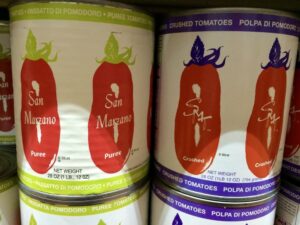
The first appointment was with Sabato Abagnale at Il Miracolo Di San Gennaro, a San Marzano tomato producer in the tiny town of Sant” Antonio Abate near Naples. San Marzanos are hearty plum tomatoes whose DOP status with the European Union gives them protection against “name fraud.” So a can of tomatoes bearing the name “San Marzano” must also bear the EU’s DOP stamp to indicate that it was grown according to strict standards in Campania. However the production at Il Miracolo Di San Gennaro do not conform to these standards because, unlike DOP tomatoes, they keep the skins on the fruit. Sabato explained that 85% of the flavor of a tomato is lost when the skin is removed.

I only wish I was visiting Sabato during tomato season (August – September) so I could witness the harvest. Unlike “industry” tomatoes, Sabato’s are harvested only when the fruits are ripe. Other producers mix over- and under-ripe tomatoes but Il Miracolo Di San Gennaro uses only ones that are a deep red. The popular strain of San Marzano DOP is actually a hybrid that makes them better suited for mass production. Sabato somehow managed to find the original strain, which is what you’ll get if you can track down this extremely rare brand of tomato ($10 – $15 per 28 oz. can in US).

We did a taste test to compare them with a a can of store-bought plum tomatoes.

On my way home, I managed to hop out of the cab at the front entrance to Pompeii, the ancient city buried by the 79 AD eruption of Mt Vesuvius. Enzo stressed the need to visit this historic site, which became obvious when I noticed this 2000 year old bread oven. It looks exactly like every brick oven I saw in Naples.

As much as I had learned about the revered San Marzano tomatoes of Campania, there were still quite a few products I needed to investigate. The road to extra virgin olive oil and mozzarella di bufala still remained untouched, but thanks to Enzo Coccia I was looking forward to more meetings with producers of Italy’s finest natural foods.