
Scott's Pizza Tour Pizza News

San Marzano Tomatoes: Fact vs. Fiction

October 5, 2011

20110825-tomato-sanmarzano.JPG

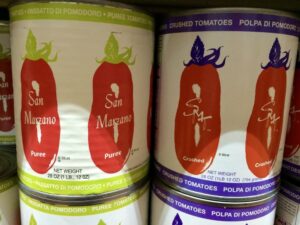
We’re nearing the end of tomato season, so why not discuss the most misunderstood tomato available? The single variety with the highest degree of name recognition is clearly the San Marzano. Heralded by chefs and home cooks alike, this bittersweet pear-shaped fruit has found its way onto food obsessives’ lists of buzz words. Yet somehow a cloud of mystery surrounds the San Marzano, with plenty of myths and legends to make even the simplest of ingredients sound intriguing. Let’s scrape away the hearsay and take a look at the facts behind pizza’s most popular pomodoro.

FICTION:
The San Marzano tomato arrived in Naples as a gift from the King of Peru in the early 1700s.

FACT:
Strange fruits arrived in the Spanish colony of Southern Italy by the mid 16th century. The tomato was one of the specimens brought back from the New World but it most certainly was not the San Marzano. Artwork from the time depicts only large, round, furrowed tomatoes unlike the long, slender, pear-shaped San Marzano. While Peru is accepted as the origin point for tomatoes, they were more likely first cultivated in Mexico because more tomato varieties are in use there.

FICTION:
The San Marzano is a pure-blood ancient heirloom variety that has been used in Italian cooking for centuries.

FACT:
After its introduction to Europe, the tomato was grown as an ornamental fruit. It makes its first culinary appearance in a 1692 cookbook as a base for a sauce recipe. The San Marzano itself doesn’t show up until much later. According to a tomato manual published in 1940, the San Marzano is listed as a “recent cross” between the Re Umberto and Fiaschetto varieties.


A late 19th century drawing of the Re Umberto tomato, named for King Umberto I.

FICTION:
The San Marzano tomato adorned the historic mozzarella and tomato pizza that was served to Queen Margherita in the Summer of 1889.

FACT:
The pizza served to the queen, which later received her name, was more likely topped with the tomato that was named in honor of her husband. The Re Umberto tomato was named for King Umberto in 1878 ion the occasion of his first visit to Naples. This tomato is smaller and more plump than the San Marzano. So why is the San Marzano listed as a requirement on VPN pies? As you’ll read below, its current form is better suited for industrial canning. [Note: San Marzanos are not a requirement for Pizza Margherita TSG, the European Union’s protective seal for traditionally crafted foods.]


FICTION:
The San Marzano is grown for fresh use in Italy and we are lucky to get cans of it here in the USA.

FACT:
One of the earliest literary references to the San Marzano appears in the 1894 USDA Agricultural Yearbook in an article titled “Redesigning the Tomato for Mechanized Production.” With the growing diaspora of Southern Italian immigrants who demanded goods from the mother country, the canning industries in both Italy and the US exploded to fill the demand. Prohibitive tariffs on imported tomatoes allowed American canneries to claim a huge amount of business. A Brooklyn woman named Tillie Lewis saw an opportunity and teamed up with Florindo Del Gaizo, a Naples-born tomato importer, to bring San Marzano seeds to California’s San Joaquin Valley. They opened a cannery in the 1930s and eventually became the country’s 5th largest. The San Marzano is excellent for canning because of its relatively low moisture content and thick flesh. It’s safe to say this variety wouldn’t have a life without the American canning industry.


FICTION:
All San Marzanos are grown on the volcanic slopes of Mt Vesuvius.

FACT:
As Adam Kuban wrote in a recent post for the pizza blog Slice, San Marzano refers both to a tomato variety and a small town on the slopes of Mt Vesuvius. A tomato grown in the EU-approved region and handled in the proper manner is eligible for DOP certification (or Protected Designation of Origin in English). Not all tomatoes grown in the approved area are actually certified, but the stamp certifies the geography and production methods approved by the European Union. At the same time, you can grow the San Marzano variety in your garden and, even though it might taste better than any canned tomato you’ve ever had, you still aren’t eligible for DOP bragging rights.


FICTION:
All DOP San Marzano tomatoes are grown on the volcanic slopes of Mt Vesuvius.

FACT:
If the DOP mark was upheld, the above would be a true statement. Unfortunately, the incredible value of this mark on a can of tomatoes has encouraged quite a few Italian canners to falsely label their products to justify DOP markups. In 2010 alone, nearly 500,000 cans of counterfeit tomatoes were caught at the port of Naples. Trust your taste buds, not a label.

20110825-tomato-miracle.JPG
Miracle of San Gennaro tomatoes.

FICTION:
Correctly labeled San Marzano DOP tomatoes are the purest San Marzano tomatoes available.

FACT:
Widespread blight pretty much knocked out the San Marzano tomato in the 1970s, forcing canning companies to produce more disease-resistant hybrids. Interest increased in the 1990s, and several companies tried to recapture the genetic code to the lost tomato. Two cultivars prevailed, the Cirio Selection 3 and the SMEC-20 (aka San Marzano 2). Unfortunately, neither have been been deemed fit for mechanical harvesting but the SMEC-20 is currently in use by Sabato Abagnale and his Miracle of San Gennaro brand. Abagnale is a real tomato rebel because he doesn’t remove the tomato skins as required by DOP regulations. When I visited Sabato in 2009, he told me that much of the flavor is in the skin and he refuses to remove them. In reality, the SMEC-20 isn’t in wide production because it falls apart easily without the skin to hold it together.

Just a few weeks ago, I held a blind tomato tasting at the Brooklyn Brainery. We tasted a variety of products from Italy, California, Canada and New Jersey. The vast majority of our group preferred the tomatoes from California and New Jersey over the Italian imports. We even tried some DOP and Miracle of San Gennaro tomatoes, the latter of which hailed $10 for a 28 oz can! It’s too bad because those cans came in last, way behind the more available and cost-effective options available at my neighborhood grocery store. I don’t mean to say these tomatoes are necessarily better, it’s just interesting what decisions one makes without the burden of a fancy label.

For further tomato reading, check out these fantastic resources:
Ripe by Arthur Allen
Pomodoro! The History of the Tomato in Italy by David Gentilcore
The Tomato in America by Andrew F. Smith
SanMarzanoTomatoes.org

** I originally wrote this piece for the pizza blog Slice.

Weekend Pizza Making

September 26, 2011

I made a batch of pizza on Friday and it came out great so I thought I’d post some photos and current dough formula for those who are interested in trying it themselves. Here’s the scoop on the dough:

380g warm tap water
595g King Arthur All Purpose flour
20g salt
2g instant dry yeast
100g Ischia starter
splash of olive oil

I started with the water, to which I slowly added the flour as I mixed. About halfway through adding the flour, I tossed in the yeast, salt and oil. When everything was incorporated, I covered the bowl and went out to run some errands. This is the autolyse phase, during which the flour gets hydrated and kneading becomes easier. I usually give about 30 minutes for this but errands took longer than expected so I didn’t get to the kneading phase until 5.75 hours later. By that time, the dough was totally ready to rock! I poured it onto my kneading surface and spent about 5-6 minutes working the batch until it felt done. I just split the mass into four 275g chunks, balled, then stored in oil-lined plastic quart containers in the refrigerator. 

Four days later, I took the dough out of the fridge and gave them about 2 hours to rise (still in their containers). The oven took about 1.5 hours cranked on broil in my basic gas oven (the broiler is on the bottom so I get most of my heat this way). Each pizza spent about 4.5 minutes in the oven before a 180 degree rotation and a final minute to finish. The results were pretty even, although my stretching definitely improved over the course of the night. Here are a couple of the results:


Mozzarella, crushed tomato, basil, sun-dried tomatoes.


Spinach, garlic, mozzarella, crushed tomato, black pepper.

I also conducted a quick, completely non-scientific, experiment using tomatoes left over from the tomato tasting I hosted at the Brooklyn Brainery a couple weeks ago. I tried two different tomatoes, one from Paulie Gee’s secretly sourced stash (Italian) and one from a popular restaurant supplier (California).

 
Uncrushed Paulie Gee tomatoes (Italian), hand-crushed tomatoes from Stanislaus (CA).

Both were plenty tasty and the pizzas were a bit different so I can’t report any conclusive findings, but the California tomatoes were definitely saltier. As always, use whatever floats your boat.

And finally, for all the pizza nerds who like looking at the details, here are a couple glory shots.

   
All pies were baked in a quarry tile cave. Check out the video at EconomyBites.

In the Presence of A True Tomato Poet

September 6, 2011

This is a guest post by Kenny Dunn, SPT alum and co-founder of Eating Italy Food Tours in Rome.

The first time I stumbled across Carmelo’s stall, the sight of box upon box of tomatoes haphazardly stacked on top of one another nearly stopped me in my tracks. The variety of shapes, sizes, colors and patterns of tomatoes is rather dizzying. I had never seen a produce stall like this in any of the nearly two-dozen food markets I had visited in Rome. In that moment I knew that the thin man with the checkered vest and slicked back hair before me was not just any old vendor. I had finally encountered Rome’s legendary Tomato Poet.
 
His real name is Carmelo D’ Agostino and the Testaccio Covered Market one of Rome’s most famous outdoor food markets, is the place he calls home.  While other produce vendors in the market carry a wide selection of seasonal fruits and vegetables, Carmelo has sold only tomatoes for the last 21 years. Depending on the season, Carmelo carries up to 45 different varieties of tomatoes. He is not a farmer, but he sources them from throughout Southern Italy where nearly all Italian are grown. His growers include both small family farms from all across the state of Lazio and larger commercial operations in the regions of Campania, Calabria and most of all from Sicily. His varied selection includes Cuore di Bue, Principe Bourgese, Camone, Datterino, Maria Vittoria, Casalino Spanuletto, Gaspare, Aprasididi, Thomas, Pixel, Genovese, and Fiaschetto, to name just a few.


Several selections from the Tomato Poet’s collection.

When I first encountered Carmelo I immediately wanted to know which of all his nearly four-dozen varieties was the most popular among his customers. I was surprised when he said that he did not have a clue. It was only after I became a customer that I understood how that could be. When you approach Carmelo’s stall he doesn’t ask you what tomatoes you want, because he believes (and rightly so) that you probably wouldn’t know. Considering that the average produce vendor in Rome carries a measly 3-5 varieties it is understandable that most shoppers have never seen the majority of Carmelo’s tomatoes before and therefore would not know what they taste like or how they should be used. Instead Carmelo asks you what you want to make and insists that you be very specific. One time several years ago, I responded to this question by saying I was making “shrimp” careful not to make the rookie mistake of saying something overly vague like “seafood”. Well that failed, as I soon found myself walking back across the street to the fish merchant to find out if the shrimp that I had purchased were of the fresh or saltwater variety.
 
For Carmelo, all of this information is absolutely essential. He can only do his job once he knows what ingredients you will be preparing and, more importantly, what you hope to do with them. After he has obtained all the data necessary, the next step is pure poetry. To watch Carmelo as he methodically selects the varieties best suited to infuse your dish with the perfect balance of flavors is like watching a painter as he mixes up the colors on his palate. When Carmelo has finally completed his dance he hands you the tomatoes in a regular old brown paper bag that suddenly feels magical as it is filled with your very own custom blend. In that moment it’s often hard not to become a little uneasy with the tremendous responsibility that has now been thrust upon your shoulders. I immediately begin second guessing myself as to whether I have what it takes to make anything that would be worthy of these tomatoes. It is usually at this moment when I feel the self-doubt really begin to build so before it turns into a full-fledged panic attack I once again look to Carmelo for his guidance. Carmelo’s other passion in life is cooking and he applies the same careful, methodical approach towards walking you through one of his own recipes as he does picking out the ingredients for it. After my fragile confidence is somewhat restored I feel ready to return home armed with the necessary tools and knowledge needed to prepare that day’s lunch.


The looming question is whether a sauce prepared from one of Carmelo’s magical mixes is actually tastier than one made from a less dramatic bag of tomatoes. I am happy to say that Carmelo’s craft is not simply an artistic endeavor. Everything I have every made with his handpicked selection of tomatoes has turned out better than any of my prior efforts. The truth is that even if there was no difference in taste I would still keep coming back to Carmelo because, after all, how often does one get to be in the presence of a true tomato poet?

You can find Carmelo and his awesome selection of tomatoes at the Testaccio Covered Market located in Piazza Testaccio in Rome, Italy. The market is open from 7:30am-1:30pm Monday to Saturday.

About the Author  Kenny Dunn runs Eating Italy Food Tours in Rome, offering daily food tasting & cultural walking tours through the city’s most delicious neighborhoods.  

Tomato Class at Brooklyn Brainery

September 1, 2011

I’m teaching a class about tomatoes at the Brooklyn Brainery this coming Tuesday, September 6 from 7 to 8:30 PM and tickets are just $15. We’ll eat some samples from Florida, New Jersey, California and my own back yard before discussing their various production practices. Bring your taste buds and thinking caps. 

Purchase Tickets Here

Summer Reading

August 3, 2011

Don’t let the summer heat get you down, chill out with a cool book about something pizza-related! Here are a few selections from my reading list.

Tomatoland by Barry Estabrook Available on Amazon
This book just came out and I’m extremely excited about it. After all, what better time to read about tomatoes than during tomato season?!? Barry Estabrook’s James Beard award-winning article “The Cost of Tomatoes” was so thrilling to the readers of Gourmet, it’s no surprise that he was able to unravel the tragic story of Florida’s fresh tomato industry even further with this book. Of course you’ll get some tomato history and science in there, but Estabrook spends most of the book exposing the horrifying conditions in which one-third of America’s fresh tomatoes are grown. If you have ever eaten a tomato and wondered why it tasted like shoe leather, you owe it to yourself to read this incredible book.

Pizza Tiger by Tom Monaghan Available on Abe Books
I snatched Dominos founder Tom Monaghan’s autobiography from an online seller for $1, which is probably triple the cost of ingredients it takes to produce a single Dominos pizza. Regardless of what you think about their food, we would be remiss to ignore the delivery giant’s contributions to the pizzaverse. In the book, Monaghan claims responsibility for inventing or revolutionizing the pizza box, heated delivery units, dough proofing trays and more. I especially like the part where he describes a trip to New York in the mid 1960’s only to find that nobody’s pizza is as good as his. Even with some serious stretches of reality, Pizza Tiger provides great insight into the mind of the man who built the world’s largest pizza delivery empire.

Wood Heat by John Vivian (illustrations by Liz Buell) Available on Amazon
If you’ve ever wanted to know more about the wood that burns in pizza ovens (really any furnace, but this is a pizza lifestyle blog) this is the only book you will ever need on the subject. I’m serious. This book contains over 400 pages of dense information told in a comfortable way by a guy who just really loves burning wood. You’ll learn about different types of wood, benefits of wood, how to build different furnaces and MORE! The intensity of the writing is matched only by Liz Buell’s incredible illustrations.


A guy storing wood or the infamous Wood Bandit? You’ll find out when you read this book. [Illustration: Liz Buell]

Killer Pizza by Greg Taylor Available on Amazon
This is the only book in the list I haven’t actually read yet, but a friend gave it to me and I can’t just leave it out. The main character gets a job at a local pizzeria only to discover that it’s just a front for a monster hunting organization. How cool is that!?!?!? There’s probably some pizza-making action in there but I anticipate the monsters being more central to the plot.  Rumors abound that this book’s sequel is coming out soon, so be sure to read Part 1 before all the cool kids get into it. And I really do mean kids, the reading level of this book is ages 9 - 12.

Tomato Update - Week 10

June 16, 2011

This hasn’t been a great growing season for me so far and these last few weeks have been even worse.

Just as a refresher, I found a tomato on the train tracks at Capua station in Italy this February and smuggled the seeds back to Brooklyn. Even though the seeds sprouted quickly, they didn’t live too long thereafter. Only five of the seedlings made it to week 6.

Now for the update. I only have room for four plants, so I gave a plant to one of my favorite pizza makers at Lombardi’s. The next day, I decided it was time to put the remaining seedlings in the ground. I had prepared a makeshift bookshelf planting bed and carefully mixed the soil with fresh compost before covering it with a black plastic sheet (to keep out weeds and retain heat/moisture). The plants were still really small and I’m pretty nervous about backyard creatures so I installed a short chicken-wire fence around my planting bed just to be safe. 

The next day, I awoke to a massacre. In hindsight, I probably should have taken a photograph of the destruction but it’s probably for the best that I didn’t. Too many emotions. The entire bed was torn up and my delicate smuggled Italian tomato plants were uprooted from their new homes. Who could have done such a thing??? Footprints in the dirt revealed the horrible truth: my upstairs neighbor’s adorable dog Finn had tomato blood on his paws.

I found all four victims and replanted them immediately, but only 1 survived the shock of “The Massacre.” He stands proud, living in spite of his traumatic past. We’ve been getting steady sunlight and rain, so the environment has been pretty good. Finn is no longer allowed out back by himself, but we rekindled out friendship and all is forgiven.

As you can see from the photo below, the tomato bed is pretty roomy. One of my neighbors gave me a tomato plant to express his condolences, so I planted it in the plot on the left. It may not completely fill the void left by the departure of my beloved smuggled tomato plants, but it does serve to honor them.

We have lots of other stuff growing this year, so I installed a water bucket to collect rain to help me water all those suckas. It’s pretty sweet, I grabbed an empty olive barrel from Coluccio & Sons in Brooklyn (one of my favorite sources for cheese, tomatoes, oil, etc) and covered the top with cheap mesh screen. I still want to add some funnels to trap more rain, but the project will be ongoing as the season continues.

Tomato Update - Week 6

May 13, 2011

I am a murderer.

After planting my tomato seeds on April 6, I underestimated the growing power of an electric blanket and failed to notice that they had all sprouted within four days. I left the entire tray covered with a sheet of plastic wrap to keep in moisture, but the low ceiling inspired funky growth patterns in my cute little seedlings. I figured this was just a temporary flaw that would be fixed by nature, but it didn’t seem to go away even after days of even exposure to sunlight.

Beginning of Week 2, with funky growth patterns

But at least my plants were still alive. They didn’t look too pretty, but at they were standing upright and that’s more than I can say for them today. Am I using bad soil? Am I not watering them enough? Am I watering them too much? Am I depriving them of real sunlight? Well, maybe I was a bit of an overprotective parent but I kept my little seedlings inside because it’s dangerous out there in my Brooklyn backyard. We have one of the only yards in the area and apparently it’s the only place the wind can hang out because it turns into a tornado anytime there’s a light breeze. I was afraid the gusts would funk up my prized plants so I kept them inside. Little did I realize that depriving young seedlings of sunlight was as much a death sentence as I could give them, but I caught the mistake just in the nick of time.

Last year’s crop was probably too big for me to handle so maybe it’s good that some plants didn’t make it so I can concentrate on the strong few who did. These vines will compete for sunlight and the last thing I want to do is let them cramp eachother’s style. I only have room for four plants in my designated tomato zone, so it would be unnecessary to grow more than that. The remaining six tomato plants aren’t going to win any beauty contests but they were alive and that’s all I want.


Survivors - week 6

I can see that these wee lads are maturing because they are growing their first real leaves. This is an important step in every young tomato plant’s life because it shows some true characteristics of a mature vine. One day, they will be transplanted and only these mature leaves will show. It will be their triumph as the lonely survivors of the Class of 2011. I have to admit that it does make sense. Most of these seedlings were hatched from seeds I brought back from a tomato I found on the train tracks at Capua. The seeds survived the dangerous railroad, a long flight home, a close call with customs, and a good week or two of sunlight deprivation. They truly are fit for survival.


Mature leaves at week 6

If all goes according to plan, these little guys will go into the ground at the end of May. I have my soil mixed with fresh compost and covered with a sheet of black plastic. This will protect the soil from weeds while absorbing heat to warm soil in preparation for  my brave soldiers. 

So it all comes down to this. My seedlings have just over 2 weeks to show me they’re serious before they hit real outdoor soil. Today I caught myself looking at photos of last year’s tomatoes, hoping and dreaming that this year will be an improvement. It looks like I’m off to a rocky start, but I believe in the magic of tomatoes.


Tomato bed, made from a scavenged bookshelf, is ready for action

Return of the Tomato

April 16, 2011

Buckle up everybody, I’m growing tomatoes again. Last year’s roller coaster of emotions was so intense, I just can’t keep myself away from the constant battle between man and nature that comes with growing tomatoes in an empty Brooklyn backyard. If tomato season 2k10 taught me how to swim, this year will take me into the deep end.

The adventure started on my trip to Italy earlier this year. I planned some dangerous operations, all of which would potentially result in the testing of some popular tomato mythology. Everything worked out according to plan and now I have some tricks up my sleeve for this year’s tomato season.

Trick #1 - The Seed
I started last year’s experiment by ordering seeds from a reputable company based in California. They were great and the seeds sprouted beautifully, but I craved more mystery. BINGO! I found a tomato on the tracks of the train station in Capua after spending the day on a buffalo farm.

Our friend/guide Nino was excited to see the tomato and told me that this was “an authentic San Marzano tomato.” There are a couple problems with this proclamation, mainly the fact that January is about as far from tomato season as you can get. If I found the tomato in August, I would be far less skeptical. Then there’s the sad truth that the San Marzano variety has been cross-bred so much that there remains no such thing as an “authentic” specimen. And any picture I’ve seen of an “authentic” San Marzano tomato looks pretty different from this one. But the fact remained that these lovely Italian tomatoes were about to become rail-kill if I didn’t intervene.

The least I could do was gut my precious cargo and dry out the seeds. This occurred a few days later in the kitchen of a bed and breakfast in Palermo.


Trick #2 - The Soil
Every pizza enthusiast knows the refrain Italian tomatoes are fantastic because they are grown in the rich volcanic soil around Mt Vesuvius. Well I have never been much of a fan of that tune and I fell even harder off the bandwagon after our tomato taste tests last year. The Italian samples scored much lower than those from California and Canada. There are a few good explanations for the discrepancy, such as our tasters’ inherent preference for familiar products and the possibility that some cans marked as being from Italy may have been filled with lies rather than rich and tasty pomodori. Regardless, I wanted to do my best to simulate the fertile soil surrounding the stunning and stoic Vesuvio.

That’s why I took a ride 1000 meters up the slopes of Mt Vesuvius and grabbed a handful of soil.

Yeah, I know. I grabbed mostly rocks and chunks of hardened volcanic debris. But let’s be honest with each other — my experiment will not be the most scientific endeavor imaginable. I spent some time lining my pocket with a plastic bag to contain whatever I managed to scoop, but the operation was complicated by the gang of van drivers watching my every move. But it all worked out and I escorted my bits of sacred volcanic ash back to Brooklyn.

When time came to plant my salvaged seeds, I sprinkled a bit of the finest debris atop some of my lightly packed tomato nests. Of course I didn’t grab any actual soil and there surely isn’t enough to run a comparison, but if a dusting of Vesuvian dust results in crazy-amazing tomatoes I will certainly be the last one laughing.

#3 - The Defense
I had some major issues last year with unwanted guests chomping down on my sweet red beauties so this season I’m upping my game with a jug of wolf urine. Thank you, Internet! That’s right, the Information Superhighway seems to have sources for all sorts of animal urine off every exit. Apparently vicious tomato-killing critters are not cool with hanging out in backyards that get whizzed in by wolves [Wait, am I?]. I’m not sure Brooklyn vermin have ever seen or even know that they should fear wolves, but I’m willing to take the chance.

I’m pretty excited about this year’s batch! Hopefully everything will work out and I can can some ripe beauties for winter use. Let’s just hope I don’t end up with a backyard that smells like Wolf wee-wee and rotten tomatoes.

Tomato Taste Test Part II

November 12, 2010

Exactly eight weeks after our crack team of pizzaphiles and tomato enthusiasts congregated in my back yard to dive into the highly-controversial world of canned fruit studies, an even larger and hungrier gang gathered for round two. The weather was colder and the group of tasters was larger, so our venue was shifted into the Lower East Side’s cozy Pizza a Casa, a pizza (and now pasta) training center and supply store. After analyzing the method used for round 1, we tweaked the process a bit.

Here’s how the test went down. I brought unlabeled cans to Pizza a Casa for Mark and Jenny to distribute into identical serving boats. Prior to delivering the goods, I marked each can with a letter (A-O). Each serving boat was marked with the letter from its corresponding can.

Tasters were each given a unique tasting order, so no sample was relegated to the first or last position. We graded sweetness, acidity, texture, color and overall flavor on a scale from 1 to 5, with 5 being the highest. We tasted 15 samples but one tomato appeared twice to act as a control. Any tasting sheets whose findings for these two identical tomatoes were drastically different were ignored in the final tally. Two sheets were disregarded for this reason; one additional sheet was ignored because it didn’t have data for most of the tomatoes.  This left eleven data sheets to be included in the final tally.


I have to admit, our roster of tasters has been really exciting for both taste tests but this round was incredible. Here’s the roll call:

Roberto Caporuscio (Keste)
JoAnne Ling (Scott’s Pizza Tours)
Brooks Jones (Me, Myself & Pie; Paulie Gee’s)
Mark + Jenny (Pizza a Casa)
Adam Kuban (Slice)
Rachel Cohn (author; tomato lover)
Louis Colluccio (Coluccio & Sons)
Megan (tomato lover)
Jason Fierman (I Dream of Pizza)
Michael Glazer (Pullino’s, Paulie Gee’s)
Michael Park (food writer)
Sara Bonisteel (food writer)
Al Santillo (Santillo’s Brick Oven Pizza, Elizabeth NJ)

I did not participate in the tasting because I already had too much interaction with the cans. The group was stacked with killer taste buds and pizza palates so I was content to let ‘er rip and wait to tally the results. It was funny to watch because everyone was so intense. These people were so focused it made me uncomfortable. I wanted to toss a whoopie cushion under somebody’s chair but I held back. Good thing too, or someone might have blogged that the tomatoes were giving them gas to save face.

The results of the test were super interesting because the two highest rated samples were both products of Canada. Crazy, I know. But it’s also heartwarming. Most probably expected the Italian tomatoes to come out on top, but that was not the case. Next time you’re in the canned tomato aisle of your local grocery store, keep your eyes peeled for Luigi Vitelli and give them a whirl. They scored highest in all five tasting categories and took home the prize for overall flavor. Way to go, Canada!

For the rest of the results of our taste test, check out the full writeup on Slice. It even has a link to the raw data so you can make your own observations. If you missed the results of Round 1, you can check those out on Slice as well.